Wondering whether a private pool is a must-have in Seville, or just one more thing to maintain? In a hot East Valley climate, it is easy to see the appeal. But in a community where many buyers may also have access to club swim amenities, the answer is not always simple. If you are buying, selling, or deciding whether to add a pool, this guide will help you weigh the lifestyle, cost, and resale factors that matter most. Let’s dive in.
Why pools matter in Seville
In Seville, a pool is a common feature, not a rare luxury. Realtor.com research found that 58.4% of listings in the Phoenix-Mesa-Chandler metro included a swimming pool in 2025. That tells you pool homes are part of the local market norm.
The climate helps explain why. Phoenix climate normals, which are a useful metro proxy for Seville, show average daily highs above 100 degrees from June through September. In that kind of heat, pool season feels long, and many buyers see a pool as a practical lifestyle feature.
Seville has another factor to consider
Seville is a little different from some other East Valley communities because of the water amenities tied to Seville Golf & Country Club membership. The club markets four pools, waterslides, swim lessons, a year-round swim team, fitness, dining, and family programming.
That means some buyers may already have access to regular swim options without taking on private pool upkeep. For those households, a backyard pool may feel less essential. For others, the convenience and privacy of stepping outside into your own pool still wins.
When a private pool makes sense
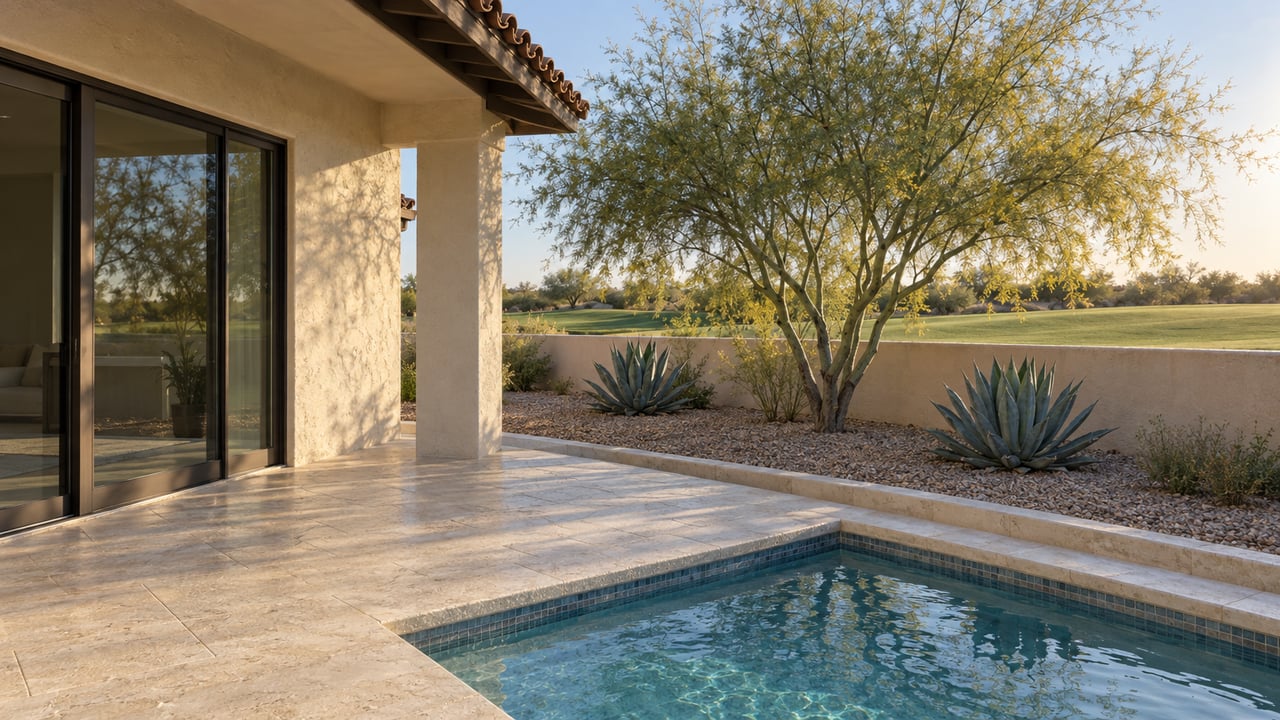
A private pool often makes the most sense when you know you will use it often. If your household loves summer entertaining, regular swimming, or quiet evenings in the backyard, a private pool can add daily enjoyment that shared amenities cannot fully match.
It can also be a strong fit if you want exclusive access on your own schedule. You do not need to pack up, drive, or work around shared-use rules. You simply walk outside and use it when you want.
For some buyers, that convenience is the whole point. In a place like Seville, where summer heat is intense and long-lasting, easy access can make your outdoor space feel more functional for more months of the year.
Signs you may want a private pool
- You expect to swim often during the summer
- You like hosting friends and family at home
- You want a more private backyard experience
- You are comfortable budgeting for upkeep and repairs
- You prefer at-home convenience over shared amenities
When no pool may be the better choice
A private pool is not the right answer for every buyer or homeowner. If you mainly want a place to cool off once in a while, community or club amenities may cover that need without adding maintenance to your to-do list.
This matters in Seville because some residents may already have access to multiple pools, waterslides, lessons, and organized swim activities through club membership. If your goal is occasional recreation rather than daily use, those amenities may provide much of the same lifestyle benefit.
Skipping a private pool can also simplify homeownership. You avoid the ongoing responsibility for water care, equipment, cleaning, and future repairs. For many busy households, that lower-maintenance option is a real advantage.
Signs no pool may fit you better
- You would use a pool only occasionally
- You prefer less upkeep at home
- You want to limit extra utility and maintenance costs
- You may already have access to community swim amenities
- You would rather use the backyard space another way
What a private pool adds to your budget
Pool ownership comes with real operating and maintenance costs. According to recent guidance cited by NAR, ongoing pool maintenance typically runs about $1,000 to $4,000 per year. Buyers should also budget for a separate pool inspection, which often averages about $125 to $250.
Energy use is another factor. The U.S. Department of Energy says a pool pump can be the largest electric motor in a home, may use a few thousand kilowatt-hours per year, and may cost as much as $270 annually. ENERGY STAR-certified pool pumps can save more than $300 over the life of the pump.
If you plan to heat a pool, your costs can rise fast without the right equipment and habits. The Department of Energy says covering a pool is the single most effective way to reduce heating costs, and a cover can cut those costs by 50% to 70%.
Water loss matters too, especially in Arizona. The EPA says pool covers can prevent up to 95% of evaporation. In a hot, dry climate like the East Valley, that is an important part of managing both water use and long-term cost.
Why condition matters more than pool count
From a resale standpoint, the question is usually not just pool or no pool. It is often what shape is the pool in. A clean, well-maintained pool can support buyer interest, while a pool with visible problems may raise concerns instead.
NAR advises buyers to watch for loose tiles, missing grout, green water, low water levels, cracks, coping-joint issues, and noisy equipment. These can signal deferred maintenance or future repair costs. A standard home inspection usually does not include a pool inspection, so a separate inspection is often worth it.
For sellers, this is a key takeaway. If your home has a pool, presentation and condition matter. Buyers in Seville may expect pools to be usable and attractive, not a project they need to inherit.
Do pools help resale in Seville?
Pool homes often sell for more, but the numbers need context. Recent NAR and Realtor.com guidance found that homes with pools sold for a 54% premium in the 2025 data set, at $599,000 versus $389,000. But homes with pools were also about 32.4% larger on average.
That means some of the price gap reflects size and location, not just the pool itself. On a price-per-square-foot basis, the premium was 21.2%, which was down from the pandemic peak. So yes, pools can support value, but they are not a guaranteed shortcut to a higher sale price in every situation.
In Seville, buyer demand may also depend on whether shoppers value private pool access over nearby club amenities. For one buyer, a backyard pool may be a major plus. For another, it may feel redundant.
Thinking about adding a pool?
If you are considering adding a pool to a property, make sure you understand the rules before construction begins. For private pools in unincorporated Maricopa County, new pool and spa construction is regulated, and outdoor pool-barrier permits must be issued before the barrier, plastering, or filling stage.
The county also says pools deeper than 18 inches or wider than 8 feet at any two measured points must have a barrier. In addition, pools must be set back at least 3 feet from property lines. Private residential pools and spas do not require operating permits.
Before you invest, think carefully about how often you will use the pool and whether that cost aligns with your long-term plans. In Seville, adding a pool is usually more about matching your lifestyle than chasing resale alone.
A simple way to decide
If you are stuck between pool or no pool, start with one honest question: How often will you really use it? In Seville, that answer can tell you more than any trend line.
If you want frequent swim time, private entertaining, and a backyard built for hot-weather living, a private pool may be a smart fit. If you want flexibility, lower upkeep, and you may already have access to club swimming amenities, no pool may be the better call.
Either way, the best decision is the one that fits your daily life, comfort with maintenance, and goals for the home. In this part of the East Valley, a pool is usually a lifestyle feature first and a financial feature second.
If you want help weighing pool homes versus non-pool homes in Seville, or pricing a property with a pool, I’d love to help you sort through the details with a practical, local lens. Tiffany Hardison offers personalized guidance to help you buy or sell with confidence.
FAQs
Should you buy a home with a pool in Seville?
- You may want a pool home in Seville if you expect to use it often, value privacy, and are comfortable with the added maintenance and operating costs.
Do homes with pools sell for more in the Phoenix area?
- Recent data cited by NAR and Realtor.com shows pool homes sold for more in 2025, but those homes were also larger on average, so the pool alone does not explain the full price difference.
What does pool maintenance usually cost for homeowners?
- NAR guidance says ongoing pool maintenance typically runs about $1,000 to $4,000 per year, not including potential repairs or upgrades.
Is a separate pool inspection important when buying a home?
- Yes. NAR notes that a standard home inspection usually does not include a pool inspection, and a separate pool inspection often averages about $125 to $250.
Can Seville club amenities reduce the need for a private pool?
- For some buyers, yes. Seville Golf & Country Club markets multiple pools, waterslides, swim lessons, and other amenities that may cover much of the swim lifestyle without private pool upkeep.